


With the world’s second largest barrier reef, hundreds of little islands (cayes, as we call them here), miles of protected ocean and coastline, Belize is a dream destination for marine lovers. Warm, crystal-clear waters teaming with life: corals, sponges, algae, and more creatures than you can shake a stick at! Here’s a quick list of our favorites, Belize’s most beloved sea creatures. How many can you spot on your Blue Reef Island vacation?
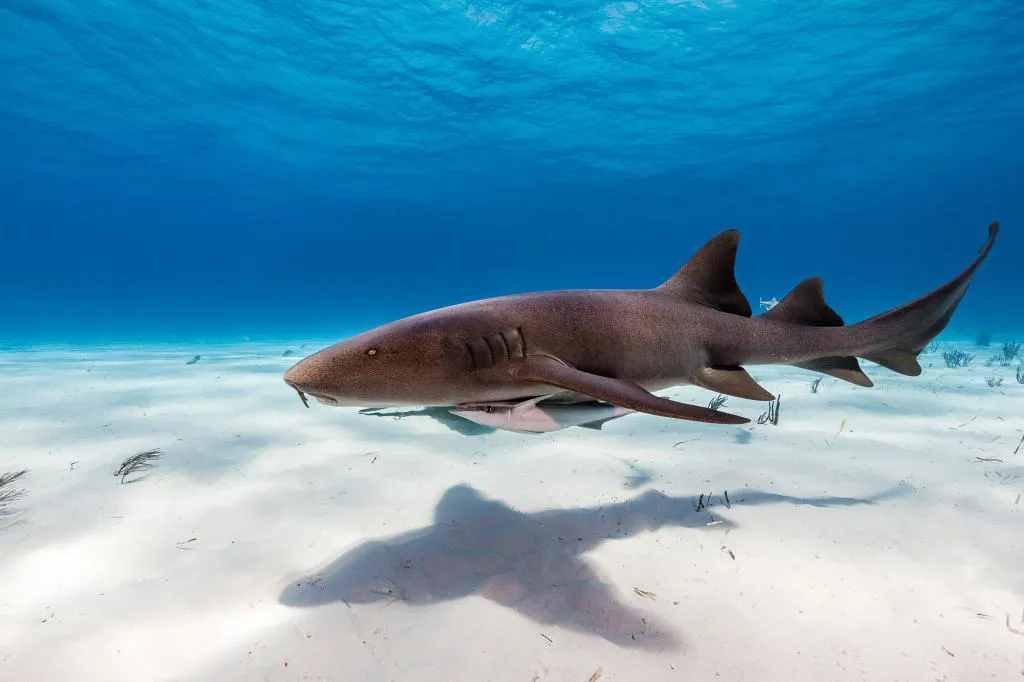
Nurse Sharks
The puppy dogs of the reef! Don’t be frightened by the name ‘shark,’ these adorable and docile swimmers are friendly and all but harmless. Grey or brown or a shade in between, they are slow-moving bottom dwellers that cruise the warm shallows along the coral in search of squid, shellfish, shrimp, and fish to feed on. Nurse sharks can grow up to an intimidating 14 feet but we often see them in the 5-9 foot range around Blue Reef Island. It is not uncommon for scuba divers to pick up a nurse shark companion on their dives. These friendly creatures will often follow the divers around, curious about what they might be looking at, and perhaps expecting a friendly stroke or a bit of fish as a treat. In areas where fishermen typically clean the day’s catch, nurse sharks congregate in number to suck up the discarded scraps. In a shallow area, within the outer reef but just outside the Silk Caye Range, there is precisely such a spot, and on a good day you can swim among dozens of these sharks as well as rays and turtles.
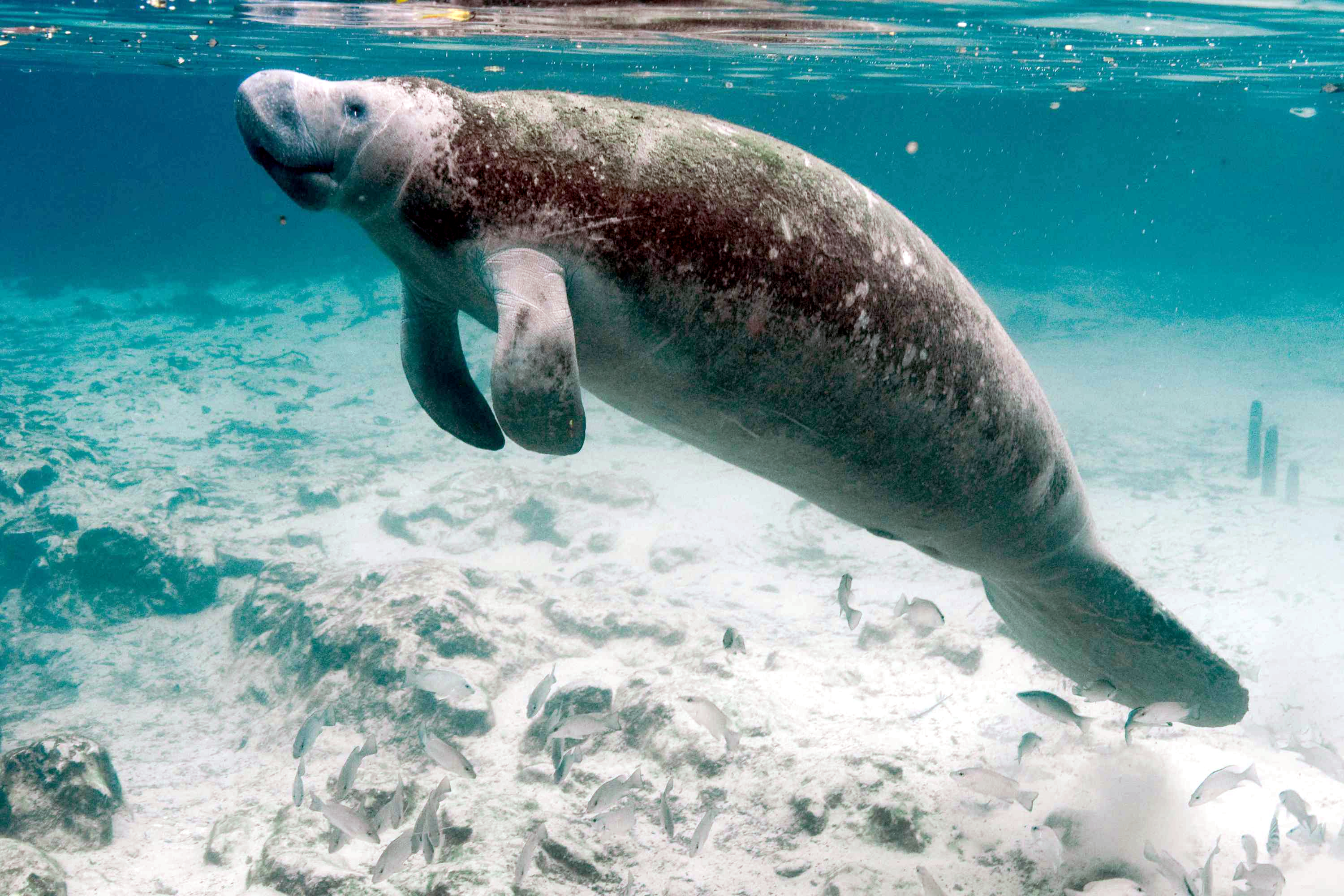
Manatees
The West Indian Manatee isn’t a commonly sighted creature out on the reef, preferring the lazy currents and abundant vegetation of the lagoons and mouths of rivers; however we do spot them around the dock at Blue Reef Island. Slow swimmers, these gentle giants lumber along, spending most of their time grazing on sea grass. They surface frequently, and being mammals, they must breath air every few minutes and that is when you can spot them from the dock on Blue Reef. Nicknamed the sea cow, the manatee lives a languid and uncomplicated life. They spend nearly 50% of their time sleeping and the rest of it eating… and it shows in their plump physique. Hard to imagine that they reach weights of 1,000 pounds on a strictly vegetarian diet. But these Belizean butterballs of the sea are a special sight that delights visitors and locals alike- who couldn’t love that flub?!
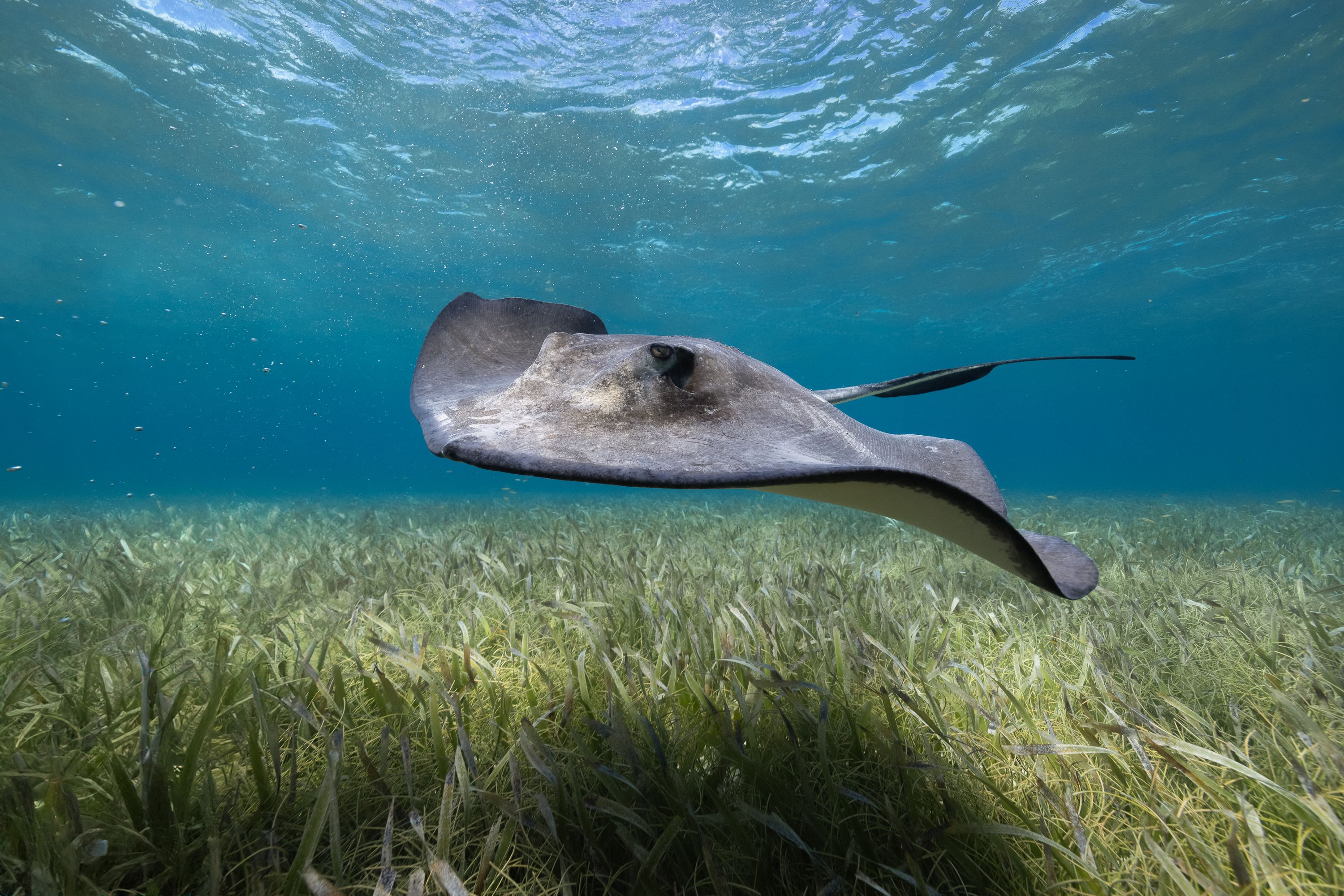
Rays
Gorgeous gliders! Stingrays are a favorite to watch, as they glide through the water like flying through the air- so graceful. We have loads of Southern Stingrays circling the shallows around Blue Reef Island. The round, gray rays can grow up to 5 feet in circumference, and patrol the sea floor, feeding on crabs and plankton. The Southern’s more handsome cousin can also be spotted off our shores, the Spotted Eagle Ray. These beauties swim more quickly and often leap out of the water, either to avoid predators or maybe simply to have fun, and then belly-flop back in with a comical splash. Sporting a sleeker design and the name-sake signature spotted pattern, the eagle rays also have a long thin tail like the string on a kite. Spotted Eagle Rays photograph beautifully both from below and above the water line.
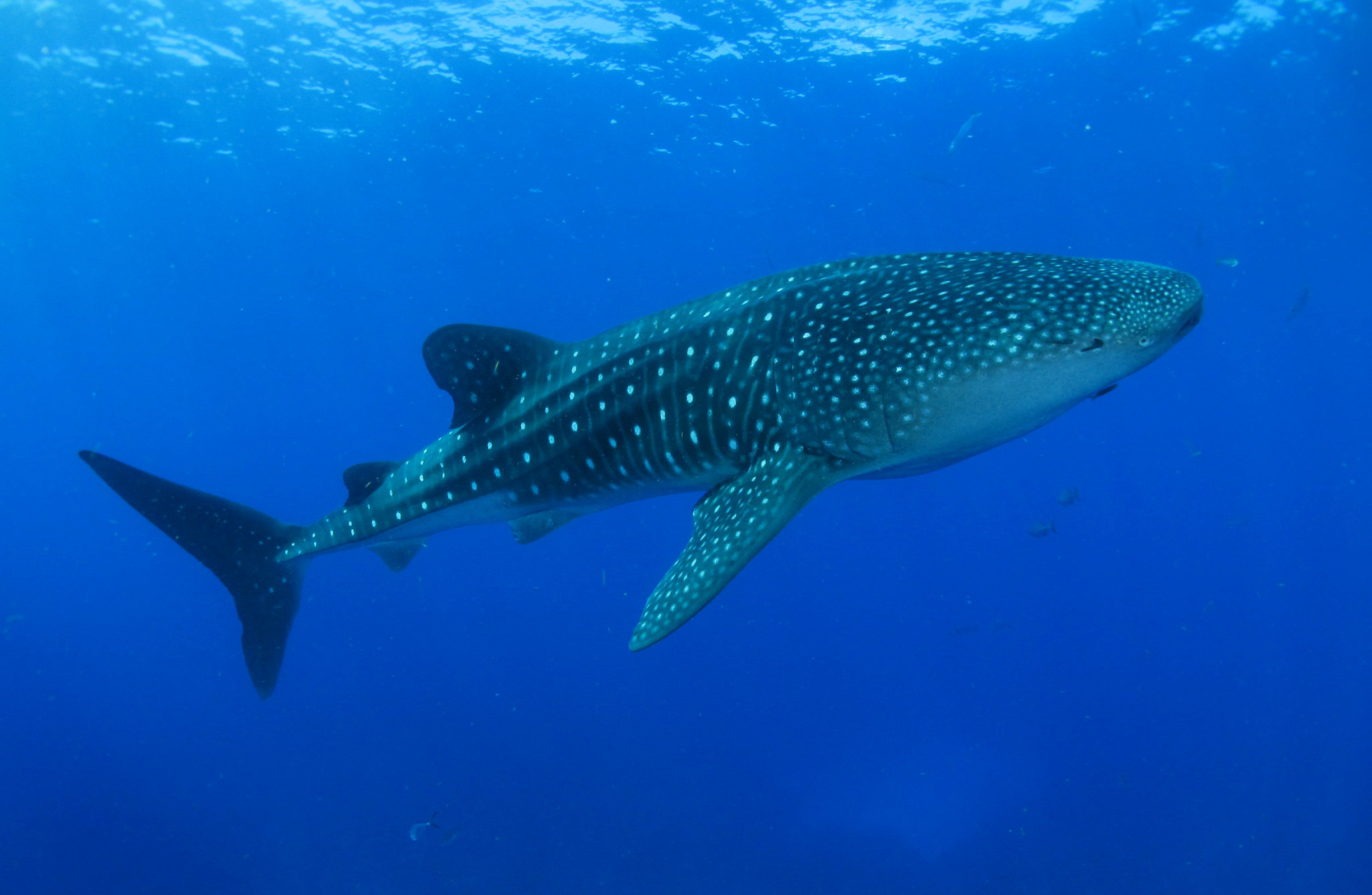
Whale sharks
We won’t get your hopes up, because whale-shark-sightings are a rarity but what a spectacular sight to see if you are so lucky! Swimming with these massive, majestic creatures is a diver’s ultimate dream. The largest fish in the ocean- whale sharks can reach up to 40 feet in length and weigh over 10 tons- is also one of the most mysterious. These gentle giants are filter-feeders that travel long distances chasing the plankton they need to fuel their huge bodies. Their migration patterns are ever changing, in large part due to our own negative impact on ocean health. Whale Sharks have long life spans (a hundred years) but reach maturity late and have never been observed giving birth so we know very little about their reproduction cycle. We may still have much to learn about these creatures, but we do know that traditionally their migration route has taken them past Gladden Split in the late spring when the snappers are spawning. Odds of a sighting are greatest around the full moons in April, May, or June.
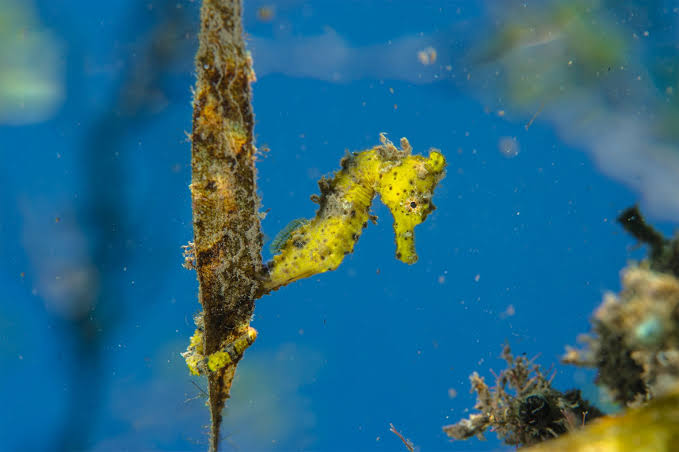
Seahorses
Everyone simply adores the seahorse, and what’s not to love? These fun, fragile little creatures with their long snouts and miniscule fluttering flippers. It is an evolutionary wonder that they’ve survived, as they are basically at the mercy of the currents. Ineffective swimmers, they mainly use their tails to cling to the shelter of coral formations or roots on mangroves, and pluck plankton from the passing current. They graze continuously and do not have proper stomachs but rather a digestive tube. Seahorse couples are monogamous and will hold one another’s tails for hours at a time. How sweet! The seahorses around Blue Reef Island are initially hard to spot as they’re small (around the size of a house key) and well camouflaged, but once your eyes adjust to seek out one, you’ll find it becomes increasingly easy to spot more. These little guys and gals can be yellow, brown, and terra-cotta in color so keep a keen eye trained to the pilings of the dock or the submerged roots of the mangroves.
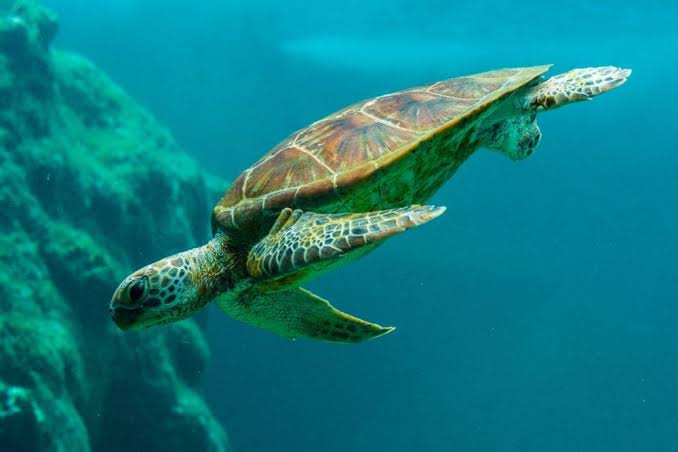
Sea Turtles
Belize has the pleasure of being home to three species of sea turtles, and they’re all adorable. Loggerheads, Hawksbills, and Green Sea turtles all cruise our waters and nest on our sandy shores. Loggerheads are the largest of these hard-shelled marine reptiles and can tip the scales at more than 300 pounds. Green Sea turtles are identified by a lovely starburst pattern on each scute of their shell and are most commonly spotted hanging out in the aquatic vegetation that constitutes a large portion of their diet: turtle grass. The Hawksbill is instantly recognized by its beak-like mouth and tortoiseshell pattern. If you are fortunate enough to encounter one of our sea turtles during your visit, be sure to snap plenty of photos but respect their space and allow them to flippity-flap by undisturbed; they can become quite cranky with interlopers and have been known to nip at unruly snorkelers.
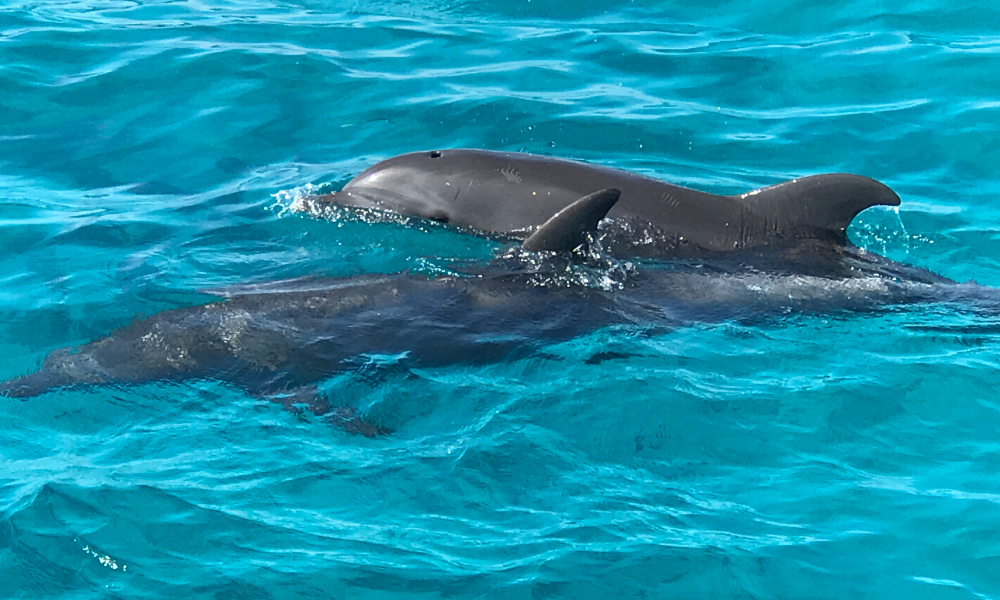
Dolphins
It doesn’t matter if we’ve seen it a thousand times, spotting a pod of dolphins still gives us a thrill. Social creatures, you will rarely see a dolphin on its own. They travel in pods, sometimes just a small family of 3 or 4 but sometimes a large group of 20. Belizean waters see Bottlenose, Spinner, Rough Tooth, and Atlantic Spotted dolphins. Jump in among a pod of dolphins and perhaps their curious nature will entice them to check you out for a bit. It isn’t the norm, but it isn’t out of the realm of possibility that these intelligent and inquisitive creatures would interact with a snorkeler or diver out in the wild.
Belize’s Barrier Reef is a world-class attraction drawing diving enthusiast, sports fishermen, nature lovers and sun-seeking visitors from around the globe. Blue Reef Island is smack dab in the center of it all, a private island retreat where you’ll be pampered surrounded by unspoiled natural beauty. What interesting and memorable sea creature encounters will you have on your Belize adventure?
